
Three weeks ago, we talked about unequal relationships, where one person does all the calling, texting, contacting, but the other person never initiates activties. In unequal relationships, only one person loves with the heart. This can happen when our parents love us out of duty, but we get the sense that they’re not happy to see us; they take care of us, but maybe never hug us; we might also do this to our parents. As a child, I remember my so-called friends at school let me tag along, but I knew they only tolerated me. This can also happen between husband and wife after many years—they stay married because of Jesus. Is there anyone who loves us but whose face doesn’t light up when they see us? Is there anyone we love but we don’t light up when we see them? Lastly, this can happen with Jesus: We may love Him out of duty, which is good, but without much heart.
Jesus wants to heal and improve these relationships, or, at least, bring some peace to them. Let’s meditate on the Gospel and make three points:
1) “When John the Baptist heard in prison about the deeds of the Christ, he sent word by his disciples who said to Jesus, ‘Are you the one who is to come, or are we to wait for another?’” (Mt 11:2-3). St. John is in prison for defending marriage: He opposed King Herod’s marrying his brother’s wife. Christians who go to prison for following God’s teaching do so because they love God with the heart; if they only loved Him out of duty, duty would only get them so far and wouldn’t give them strength to suffer for God. Loving Him from the heart means we follow Him even when we get nothing in return.
So, the first point is: We can’t force the heart. God doesn’t force our hearts. If we, or someone else, don’t love with the heart, give it time and pray for ourselves and them. We should hope, for example, that our family will grow, but don’t force them. Loving God with our feelings comes with grace and by asking for it. Some of us have realized that, if we give ourselves and others sometimes years to grow, then we have enough time to know love and respond to it.
2) While St. John is suffering, he needs assurance of Jesus’ identity, and so “Jesus answered them [John’s disciples], ‘Go and tell John what you hear and see: the blind receive their sight, the lame walk, the lepers are cleansed, the deaf hear, the dead are raised, and the poor have good news brought to them’” (11:4-5). Jesus doesn’t answer directly but tells John to pay attention to the signs: Jesus is healing people physically and spiritually—signs that He is God’s anointed one as prophesied hundreds of years before.
So the second point is: Pay attention to God’s signs. He doesn’t love us out of duty. He became man for us, suffered the worst possible death for us, and keeps us in existence because He cares. And look at all the blessings in our lives. So, if we Christians ask, ‘Why are so many things going wrong in my life?’ One answer could be because He’s giving us a chance to show signs of love for Him.
During Mass, the greatest sign of His love is His Body broken and given for us. One way to respond with the heart is to sing more. We think of singing as optional but it’s an integral part of following Jesus. And if we want to stir up our heart towards Him, one way is to sing.
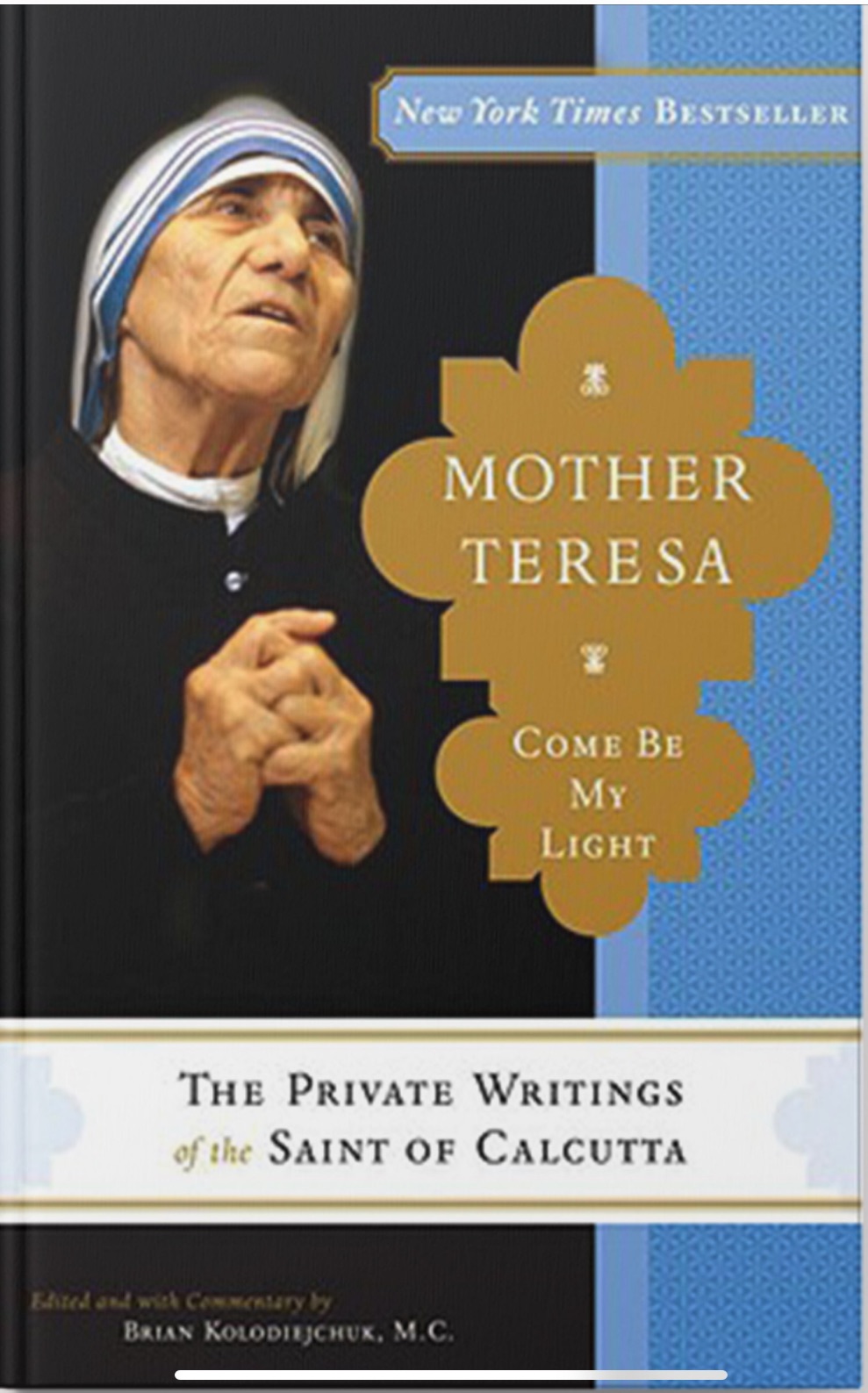
If we want to love others more, smile at them, purposely light up your face! In this book on St. Teresa of Calcutta, the word ‘smile’ is mentioned 74 times, because it was part of her way to love God and others in spite of spiritual darkness. In 1961, she wrote to her spiritual guide, “A hearty ‘Yes’ to God.’ A big ‘smile’ to all. And it seems to me that these two words are the only thing that keep me going… Pray for me Father, that I may just keep the two words ‘Yes’ & ‘Smile’” (Fr. Brian Kolodiejchuk, Come Be My Light, 219).
We can do this during the sign of peace. Years ago, I was very angry at one of you, but I talked to a friend, ‘I have to forgive [this person], otherwise, how can I stand in front of everyone and say, “The peace of the Lord be with you”?’ Because I was giving the external sign, it forced me to work on my heart. And it works the other way around as well: During the sign of peace, if we’re standing next to someone with whom we’re angry and we want to love them, then we smile more—that’s what I do with Deacon Andrew. The same applies for handshakes, and if someone extends their hand, let’s reciprocate.
3) Looking at the Gospel, I see four possible reasons for loving people from the heart: 1. because they deserve it (as in Jesus, Who, as God, deserves to be loved); 2. because we might be related to them (Jesus and John are cousins); 3. because we see something loveable in them (Jesus praises John saying, “Truly I tell you, among those born of women no one has arisen greater than John the Baptist” (11:11)); 4. because of what they’ve done for us (John suffers for Jesus, Jesus saves people).
When we consider that Jesus deserves our love, that He’s our brother, is love itself, and has done everything for us, then our hearts are moved. And we can see if these four reasons apply to people in our lives: Do they deserve love? Are we related to them? Is there anything loveable in them? Have they done anything for us?
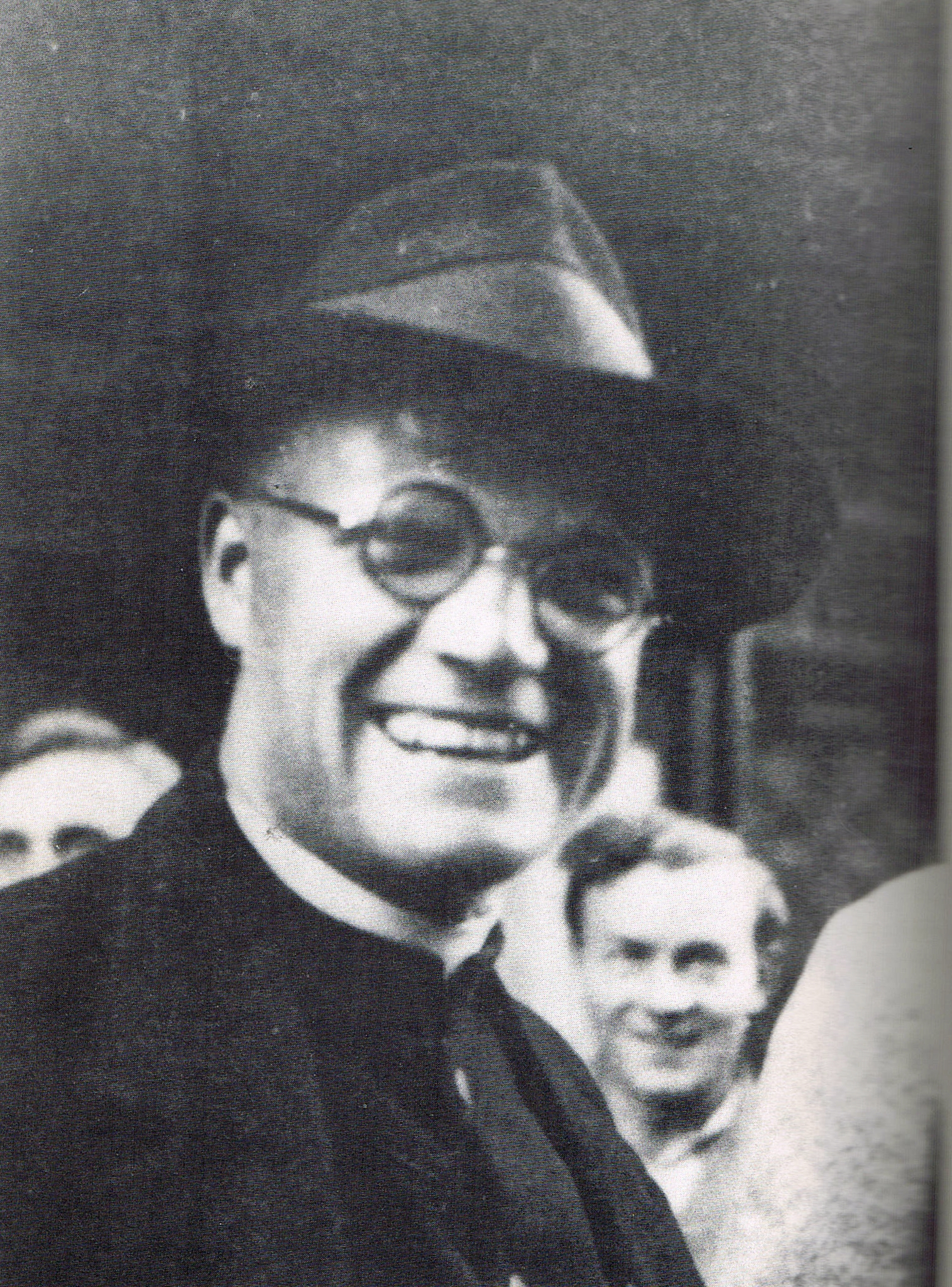
Fr. Alfred Delp
I mentioned a long time ago Bl. Alfred Delp, a German priest who fought against the Nazis. Did anyone ever see that 2008 film Valkyrie, starring Tom Cruise, about the true story of the failed assassination attempt on Hitler?
On July 20, 1944 Fr. Delp was arrested for being connected to people involved in that plot. During his time in prison, he wrote long meditations on tiny slips of paper, with one wrist above the other because he was in handcuffs, and these reflections were smuggled out with the help of a sympathetic guard. He wrote about Advent, one of his favourite themes. Four years before, he said Advent was a time of being shaken up in preparation for Jesus’ coming, a time in which we’re called to integrity, a time to proclaim our faith, and a time to respond to God with reverent awe (Alfred Delp, Advent of the Heart, 13). He called this approach ‘Advent of the heart.’
During his last days, two signs stand out. He was 37 years old at the time and hadn’t yet made his final vows as a Jesuit. Like St. John the Baptist, he was disturbed and tempted to believe that he had been abandoned by God because he wasn’t able to complete his promise to God. So, he made a novena and asked for a favour on the solemnity of the Immaculate Conception, Dec. 8. Providentially, on that date, one of his superiors was allowed in and he was able to make final vows—he saw it as a sign that his sacrifice had been accepted by God. After his trial, he was executed on February 2, the feast of the Presentation—people who knew him took this as a sign.
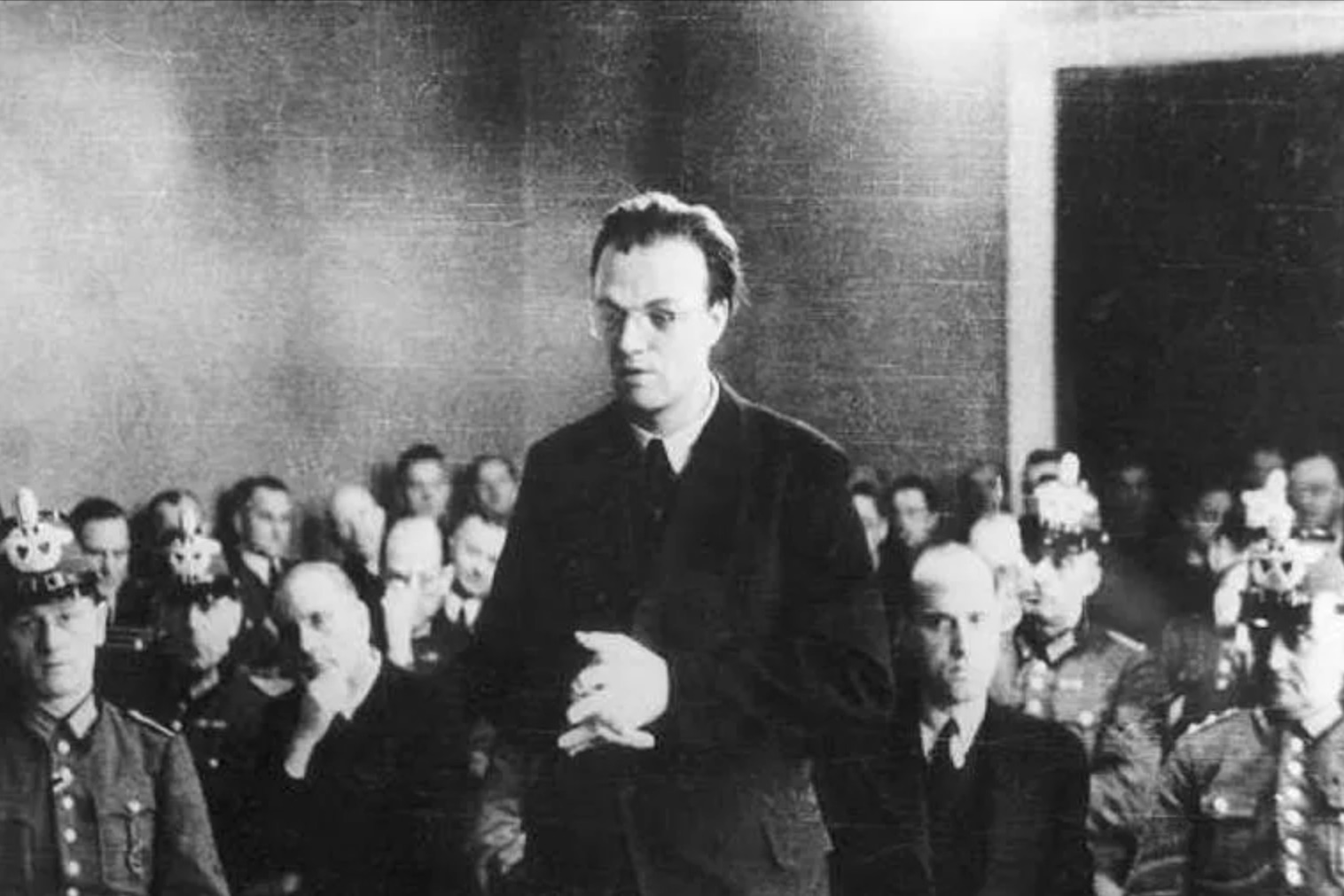
Fr. Delp’s Trial, 1945
The Presentation is also known as Candlemas, the Mass of candles, and a few years before, Alfred preached about the symbolism of candles being consumed in order to give light to others. These two signs are examples of Jesus’ love for us and Alfred’s love for Him, which came from the heart.