

When I was in Grade 12 at public school in Richmond, I didn’t tell anyone I was entering the seminary because I didn’t think anyone would understand. So when classmates asked where I was going after graduation, I lied(!) and said UBC. When they learned the truth, I was surprised at their reaction. Many said, ‘That’s noble.’ I never used that word to describe the priesthood because I was doing it to follow Jesus, but they associated a life of sacrifice with being noble.
In the Second Reading, St. Paul writes his protégé St. Timothy: “Join with me in suffering for the Gospel, relying on the power of God, who saved us and called us with a holy calling” (2 Tim 1:8-9). This is a noble request, that Timothy suffer for Jesus’ Gospel the way Paul has. It’s probably around 64 A.D., Paul is in house arrest at Rome, awaiting trial, but still able to write this letter. He knows execution is likely, so it’s time for Timothy to take up the mantle and enter more deeply into Jesus’ mission. Last week, we talked about worship, today we’re talking about service.
Philosophers have pointed out that one reason why epic stories like Harry Potter, Star Wars, Lord of the Rings are universally popular is because they remind us that we’re in a cosmic struggle between good and evil, God and the devil; we know we have to choose whether we’ll fight for good, which involves suffering (Fr. Robert Spitzer, Finding True Happiness, 61).
Today, God the Father is calling us to join Jesus, Paul, Timothy, and all the saints in ‘suffering for the Gospel.’ We all suffer, but how much of it is for the Gospel, that we intentionally accept because we’re advancing Jesus’ mission?
This is a personal call from God the Father. He’s not trying to hurt us. He made us, His sons and daughters, for greatness, and only wants to see us become like Christ. Paul’s letter to Timothy is also personal: “Paul, an apostle of Christ … to Timothy, my beloved child… I am grateful to God… when I remember you constantly in my prayers night and day. I am reminded of your sincere faith… For this reason I remind you to rekindle the gift of God that is within you through the laying on of my hands [because Paul ordained Timothy a bishop]; for God did not give us a spirit of cowardice, but rather a spirit of power and of love and of self-discipline” (1:1-3,5-7).
Some of us are aware that we never publicly pray for vocations to the priesthood and religious life. I’ve spent 12 years emphasizing that we’re first called to be saints. But now that the foundation is set, we need to pray that young men and women listen to Jesus’ call to follow Him in this special way, to give up a family in order to love a bigger family, to promise obedience and even poverty, so that they can build up the Church.
I want to thank all of you who are already suffering for the Gospel. Ivy Chan, our new Director of Evangelization, said she had no idea how much work goes on behind the scenes. When we just look at the Mass, none of us fully knows how much work goes into the choir practices, Hospitality meetings, Tech Team preparation, sacristan work, etc. We are blessed here, so thanks to all of you serving in ministries!
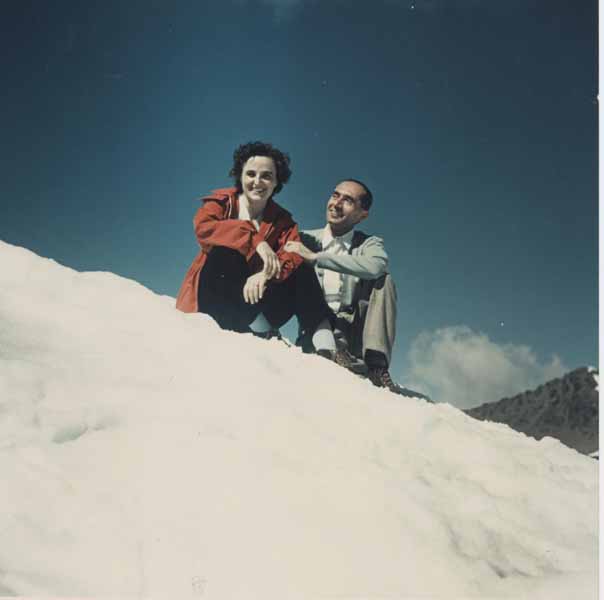
St. Gianna and husband Pietro
Paul says God “called us… according to his own purpose and grace… For this gospel I was appointed a herald… and for this reason I suffer as I do” (1:9,11-12). Being an apostle wasn’t his own plan, but God’s. As we grow closer to God, we follow His purposes more and ours less. This is challenging because we’ve all been taught to follow our own plans and fit God in. For example, why do we usually get married? To be happy. However, St. Gianna Beretta Molla got married because she wanted to make Pietro happy; and he got married to make her happy… and that made them both happy.
 Now, why do we choose our career? Maybe not primarily to help others, because, if it were, we’d be spending most of our free time helping others. We’ve been taught to choose a career that brings us fulfillment. That’s not bad. But St. Pier Giorgio Frassati entered the engineering faculty at university not for himself, but to be closer to workers, to proclaim the Gospel to them.
This is a radical shift. Paul teaches that we should sacrifice our plans for God’s plans, to further the Gospel. Nevertheless, this will make us truly happy because we’re doing what we were designed to do from all eternity. We weren’t put on earth to follow our own plans—there’s nothing heroic in that. Harry Potter, Luke Skywalker, Frodo Baggins wanted an easier path, but great stories, including ours, are about people who are chosen for a life of sacrifice.
Recently, I filled out the annual priest consultation form, about my future assignment, so that Archbishop Smith knows what I think the Holy Spirit wants. We’re asked: Do we want a new assignment: Yes, no, maybe? I brought my computer to my chapel and prayed. At first, I didn’t know what the Holy Spirit wanted me to write. But then it became clear: I asked to stay another year because I thought it would be good for this parish, not me. I wrote that my deepest desire is to see the Church flourish in Vancouver and then to go wherever I can further the Gospel.
Jesus is asking each of us to do our part to further the Gospel. Let’s pray about how we can follow His plan.
One other request, please: Once a year, around this time, we ask everyone to re-examine their financial giving to the parish. For the last two years, I’ve mentioned that we can increase it, keep it the same, or decrease it, because the goal is to do what God wants. God calls us to ‘sacrificial giving,’ which means it hurts when we give, the way Jesus loved until it hurt. So, ‘sacrificial’ may mean we increase our donation, keep it the same, or decrease it. I’ll make two more announcements about this before Easter. And thank you for your sacrifices already because your donations are part of what makes our parish flourish.
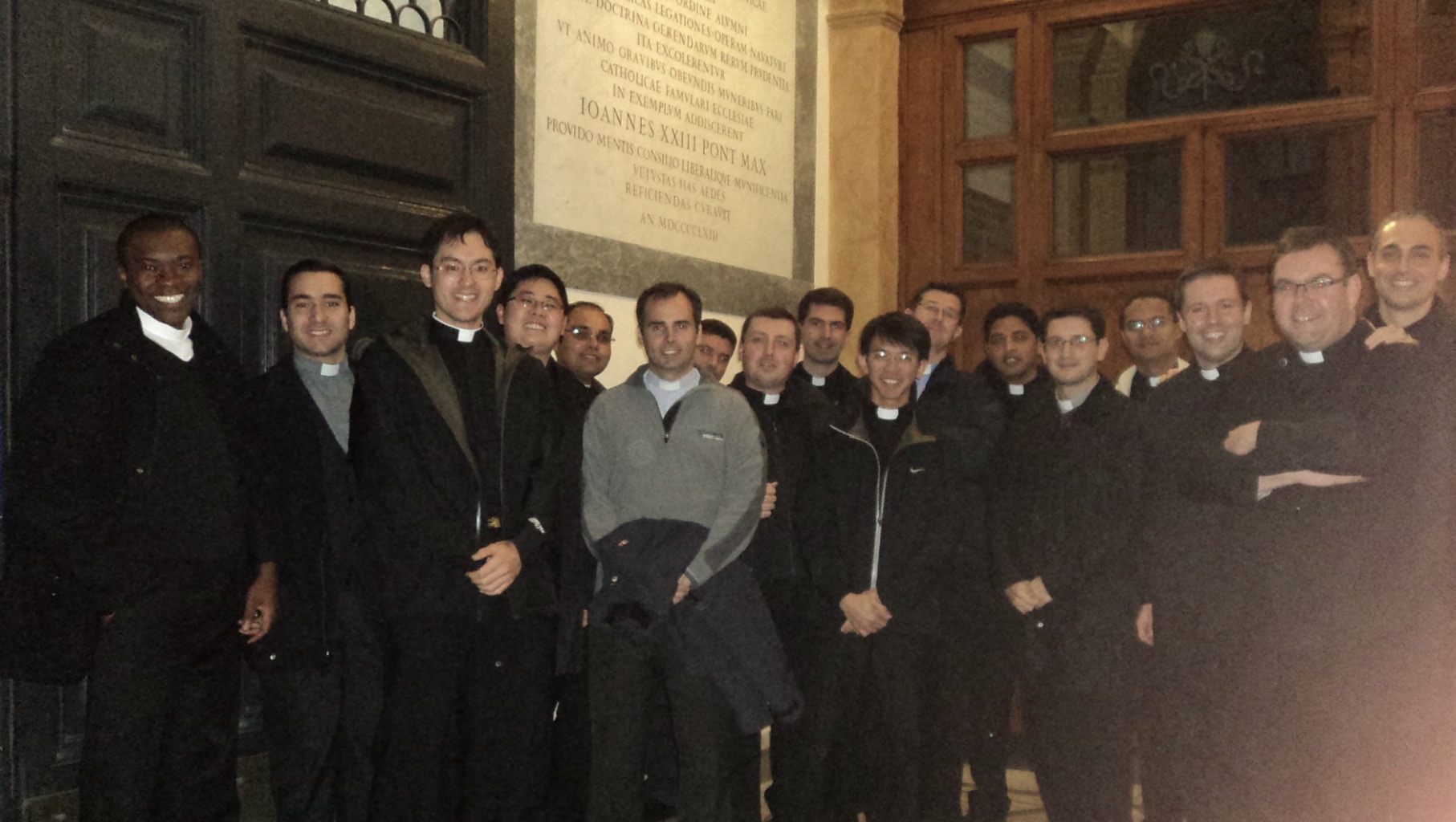
When I studied in Rome for three years, I was assigned to the Pontifical Ecclesiastical Academy, which trains diplomats for the Holy See. Interestingly, it used to be called the Pontifical Academy for Noble Ecclesiastics, meaning that you had to be a priest from a noble family. Here’s a group photo from 2012, about 33 priests from roughly 15 countries.
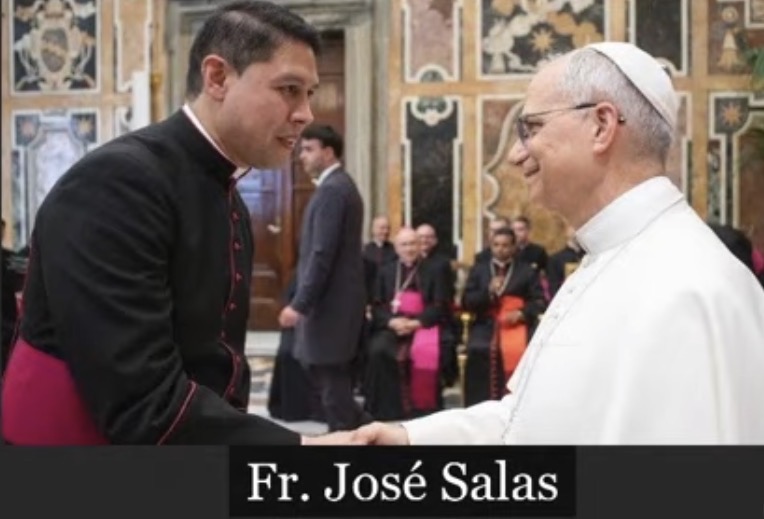
Fr. José Salas , from Mexico, is now in charge of the pope’s foreign travels;
Fr. Mihăiţă Blaj, from Romania, is working in the Vatican.
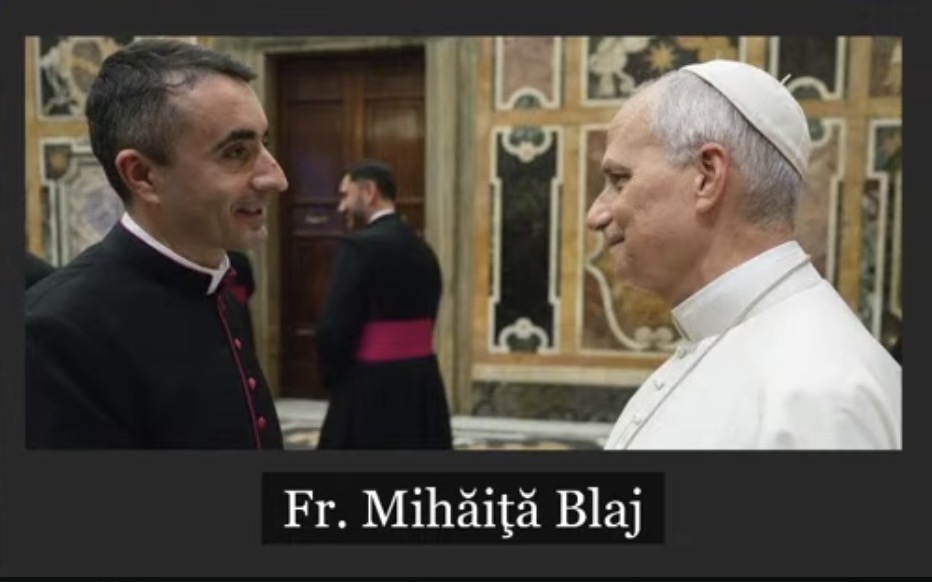
They all have doctorates, have learned multiple languages, and are monsignors now. Recently I talked to Fr. Maria Joseph Reddy, from India. His first assignment was in Pakistan, then Ethiopia, then Ukraine (during the war!), and now Poland—not easy.
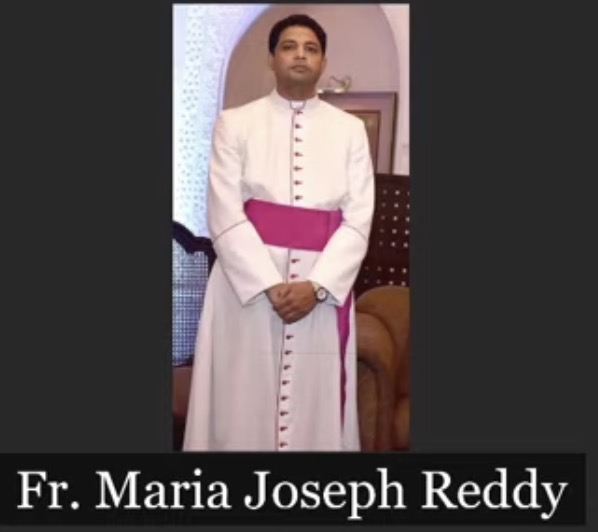
Most of them want to be back home working in parishes, so what is truly noble is that they are willing to do whatever Jesus wants: move away from their families, move all over the world suffering for the Gospel. Jesus calls us to let go of our own plans and follow His.
It’s part of the Father’s plan that I wrote this homily last week, and then Fr. James Hughes, our Vocations Director, called me on Tuesday and asked if one of our seminarians could speak today. Here now is Michael Roy:
“Good morning, it’s a joy to be with you and to visit a parish I love so dearly.
I’m currently studying for this Archdiocese, discerning if priesthood truly is the specific way God wants me to grow in holiness and serve Him. Reaching this point has been a long journey.
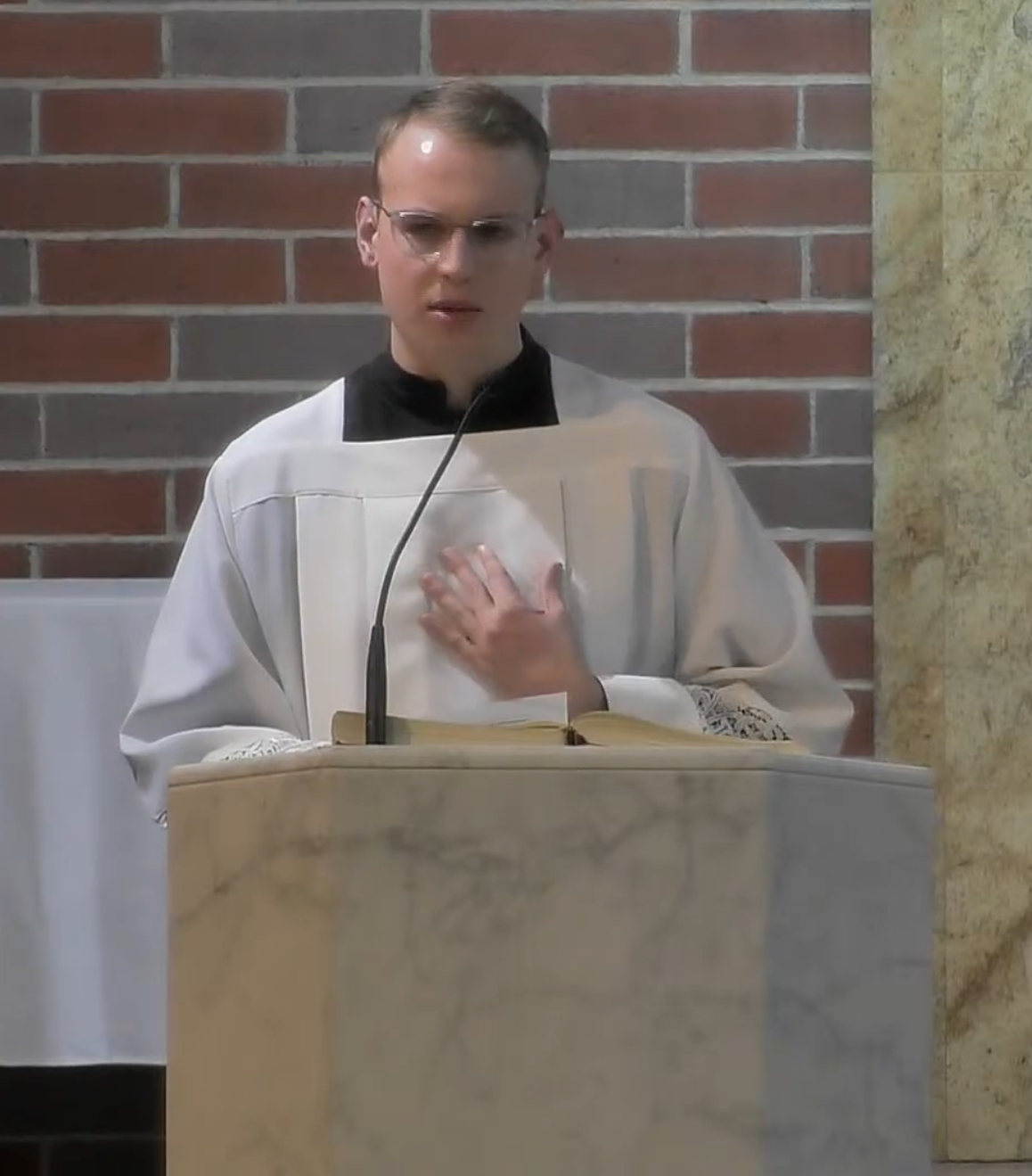 My discernment began around the time I entered high school. Out of the blue, this thought just started appearing in my head that I should become a priest. I tried to ignore it at first and hoped it would go away, but it would always come back. I never had any interest in priesthood (in fact, the idea of it terrified me), and no one around me had brought up the idea, so I knew this thought wasn’t coming from me.
I had a laundry list of reasons why I shouldn’t be a priest; I can’t live without marriage, I’m an introvert, I have autism, and so much more. But I couldn’t just dismiss the idea if there was a chance it was from God. So I took small steps over a long time: throughout high school, I talked to the vocations director and went on a couple seminary live-ins. After graduation, I joined a men’s discernment group and did some research of different orders. I also started saying “yes” to things that were outside my comfort zone. One of them, as some of you know, was working for CCBR, a group that does pro-life activism in public.
It was these small “yes-es” that disposed me towards making the big “yes” of beginning seminary formation. I was way too afraid to say yes to seminary while in high school, and still afraid throughout university. I just couldn’t do it. But I could make those small yes-es, and by the time I graduated university, seminary was no longer an impossible idea; I was finally willing to at least try it.
Now that I’m in seminary, the fears and doubts didn’t fully go away. But something better happened: I realized that God’s plan isn’t limited by my sins and shortcomings. He wants me in spite of them. And that’s given me freedom not only to discern, but to live out of love of God, not fear or shame.
So I encourage any of you who might feel called to a consecrated vocation but are afraid: don’t worry about choosing priesthood or religious life right now. Start with some small step that you do feel comfortable taking, and then take another. God honours the trust we give Him, and He never takes without giving us an abundance more. Despite all the challenges that have come with entering seminary, He’s given me greater peace, joy and love, for Him and for others, than I could ever have imagined.”