In the Gospel, why does Jesus ask so many questions: “What are you discussing with each other while you walk along? … What things? … Was it not necessary that the Christ should suffer these things and then enter into his glory?” (Lk 24:17,19,26). As God, He already knows what the two disciples are talking about. So, why ask them? The two disciples say: Don’t You know what things have been going on? Instead of telling them, ‘Of course, I know, I was there,’ He says, ‘What things?’ And instead of telling them that the Messiah needs to suffer, He asks: Do you think the Messiah should suffer? Why so many questions? If we know the answer, it will make a big impact on our relationship with God.
First answer: He asks because He wants them to tell Him what they’re thinking. I once had a friend who would often cut me off and finish my sentences. I’d be sharing something personal, and then he’d jump to the conclusion. So I’d say, ‘Will you let me finish?’ Even if someone knows what’s in our heart, there’s a human need for us to articulate it.
When Jesus asks “‘What are you discussing with each other while you walk along?’ [He gives them a chance to express themselves] They stood still, looking sad” (24:17), because, if we don’t reveal ourselves, there’s no relationship. Some people say, ‘Why do I have to tell God what I think when He already knows?’ Because that’s what friends do. If you don’t tell Him, there’s no relationship; He’s just a mind reader. And it’s not just giving Jesus a laundry list of things we want. It’s revealing ourselves to Him, the way He does to us.
 The people with the best relationships with Jesus are those who share honestly how they feel. In this wonderful book, André Regnier says that the second step in prayer is honesty. ‘I am tired and stressed. I’m having a hard time motivating myself to engage in prayer.’ ‘I’m excited to pray and know you will speak to me today! You are so good, and I love you.’ ‘God, I am angry with you, and I don’t feel I can trust you.’ Why does Jesus ask so many questions? So that we freely reveal ourselves and engage in a relationship.
Second answer: So that we articulate what we think and then have a chance to grow. Many times, I vent to Jesus, ‘I can’t do this. I can’t stand that guy,’ and then I change my mind. After calming down, I say, ‘I just don’t know how I’m going to get it done in time. And Deacon Andrew is 99% great.’
After the two disciples share their perspective on Jesus’ Death, He says, “Was it not necessary that the Christ should suffer these things and then enter into his glory?” (24:25-26), because they’re thinking: No, it wasn’t necessary; we thought He was going to save us with a quick victory. After venting to Jesus, the Holy Spirit will guide us to understand the truth: Jesus suffered for me—isn’t it fitting that I suffer for Him? Did He ever promise I won’t lose my job, get cancer, that life won’t be so hard? After being honest with God, it’s important not to fixate on ourselves but to listen to His guidance.
“Then beginning with Moses and all the Prophets, he interpreted to them the things about himself in all the Scriptures” (24:27). This famous painting of today’s Gospel shows Jesus pointing upward, lifting their minds to how He thinks, while they’re listening attentively.

After listening, we need to make a decision, because relationships grow especially through commitments. Unfortunately, many of us haven’t known this. We’ve been at a stage when we felt close to God but never promised, ‘I’ll always love You, Jesus, no matter what.’ Because of that, our relationship with Him has been based on feelings and it’s a rollercoaster, as opposed to being based on love, which is stable.
Two weeks ago, we mentioned the murder of 11-year-old Katie Clarey, and how her parents went through unimaginable pain. Their close priest-friend, Fr. Phil, said to the mother, ‘Kathie, we can not always understand why these things happen… Sometimes all we can do is surrender it to the Lord… I believe, and so should you, that somehow God is going to do something wonderful with Katie’s suffering and death… There is something more I am going to ask of all of you. Maybe you can not do it today, but I want you to try. I want you to not only offer your sufferings to the Lord but also offer prayers of praise and thanksgiving to Jesus for the opportunity to suffer with Him. Unite your suffering with Him on the cross for the salvation of souls’ (Jeff Cavins & Matthew Pinto, Amazing Grace for Those Who Suffer, 116). When Mike, the father, heard that, he flipped out on the inside—that was too much to ask. Kathie, however, went through a battle in her mind and heart. How could she thank the Lord for this pain? But she felt she had to try. So she made a decision. Later, she said that, as she began to thank God, as soon as the words came out, a sense of peace came over her. She was still in agony, but there was a glimmer of hope. The decision she made, by the power of the Holy Spirit, allowed some light to shine in.
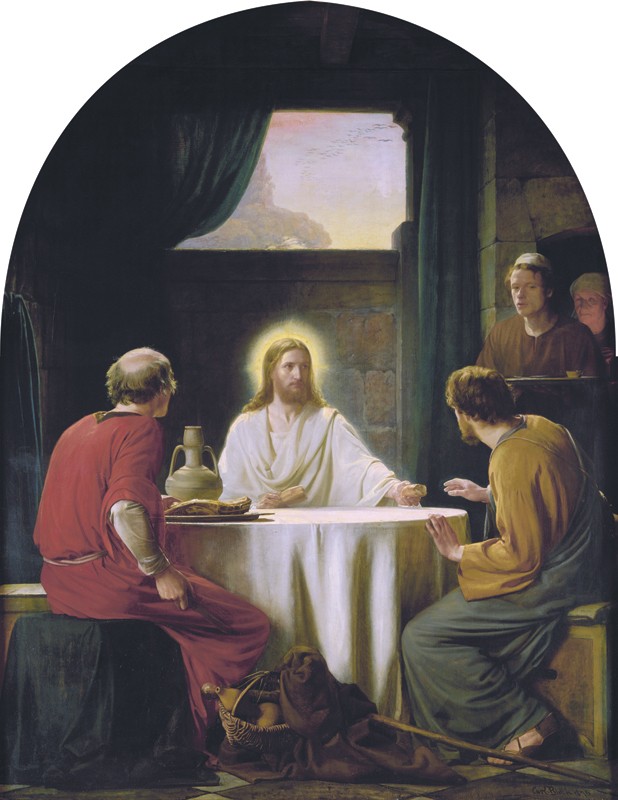 “As they came near the village to which they were going, he [Jesus] walked ahead as if he were going on. But they urged him strongly, saying, ‘Stay with us, because it is almost evening and the day is now nearly over.’ So he went in to stay with them” (24:28-29). Jesus walked ‘ahead as if he were going on’ because He wanted them to ask Him to stay. He loves us, but wants us to choose it freely.
“When he was at the table with them, he took bread, blessed and broke it, and gave it to them. Then their eyes were opened, and they recognized him” (24:30-31). Many of us know that these four verbs put together are technical words for the Eucharist.
One question we’ve been asking is: Do we want to commit to spending at least 15 minutes a week with Jesus before the Blessed Sacrament? We’re not forced. Jesus wants to spend time with us. We go because He’s our friend and this is the only place where He’s physically present.
We get to choose how our relationship with God will grow! André Regnier gives other examples of decisions: ‘I will choose to forgive that person for how they hurt me.’ ‘I am going to spend less time on my phone today.’ ‘I will invite my friend to come back to church or take a faith study.’ ‘I am going to pray “Jesus, I trust in you” every time I feel anxious today.’
Why does Jesus ask so many questions? He wants us to engage in a relationship with Him and decide to love Him the way He loves us.