Is one reason for some of our struggles that we’re too dependent on ourselves? It is for me. Here are three signs that we may depend more on ourselves than on God the Father: 1) (Prayer during crisis, not after) When we’re in a crisis, we start praying more; after the crisis, we don’t pray as much. This reveals that, when things seem okay, we think we don’t need our Father. 2) When there are many things to do (get to work, study, take care of our family), (Default is work, not prayer) our first reaction is to work, not ask the Father for help; 3) We spend more time asking God for blessings than we do thanking Him. Some people pray, ‘Hail Mary, full of grace, help me find a parking space.’ But do they thank our Mother after? If we were more conscious of our need for God’s help, we would thank Him more. A woman recently said to me that she tells single women to pray, ‘St. Ann, St. Ann, help me find a man.’ So, there should be a lot of gratitude to Jesus’ grandmother!
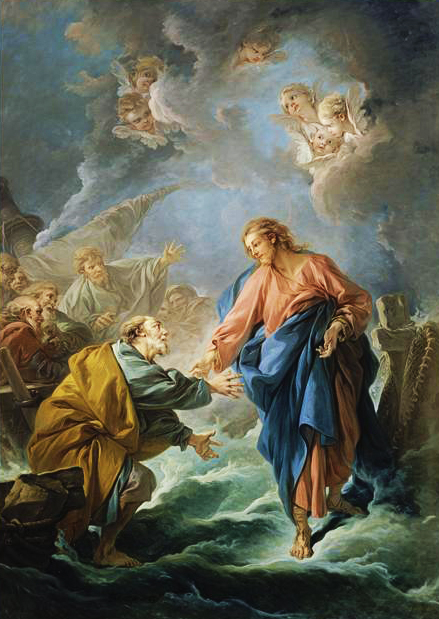
The key point in today’s famous Gospel, when St. Peter miraculously walks on water heading towards Jesus, is that he starts sinking when he focuses on himself instead of Jesus.
The Gospel begins: “Immediately after feeding the crowd with the five loaves and two fish, Jesus made the disciples get into the boat and go on ahead to the other side… [Jesus sends His friends away but He’s not abandoning them; He’s going to meet them later. This is important because we sometimes are tempted to think Jesus has left us alone.] And after he had dismissed the crowds, he went up the mountain by himself to pray” (Mt 14:22-23). This is fascinating: Jesus is God yet depends on His Father. That’s a theological mystery, but, suffice it to say, the Son depends on His Father—that’s not a bad thing, because depending on a Father Who’s trustworthy and loves us is like depending on a strong foundation: it always supports you.
“When evening came, he was there alone [on the mountain], but by this time the boat, battered by the waves, was far from the land, for the wind was against them” (14:23-24). Have we ever considered that Jesus was on the mountain praying for His friends? If this is true, it shows us that Jesus’ first reaction isn’t to rush down to them, but to save them by prayer. In John 11, when His friend Lazarus is dead, Jesus prays first before raising him to life.
Why do we have to depend on God? Answer: No one complains about depending on the sun for heat; no one complains about having to eat. We accept that we depend on the sun and on food. Perhaps in our pride, we think we can get through the day without turning to God consciously, and so we go through the day without nourishment. Maybe it’s not our pride, maybe it’s our laziness, lack of discipline, or just forgetfulness.
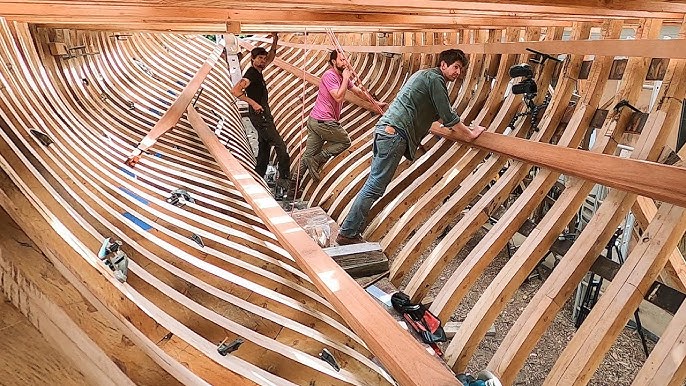
Construction of a boat
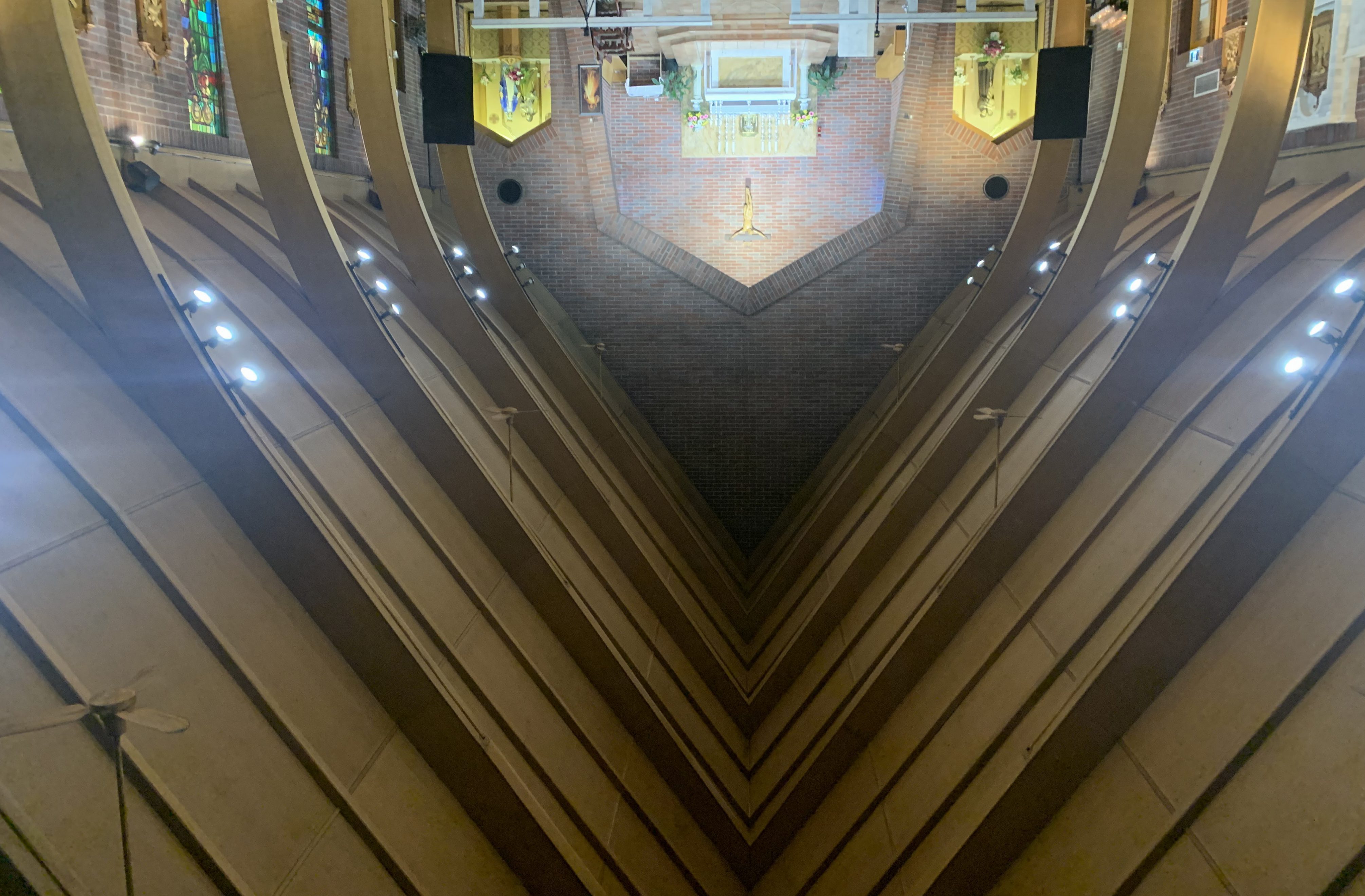
St. Anthony of Padua Church “upside down”
For the Fathers of the Church, the sea represents the instability of life, the storm represents our trials and difficulties, and the boat represents the Church. As pointed out a few years ago, the main part of churches usually looks like an upside-down boat, which is why they’re called naves, from the Latin word for boat.
“And early in the morning Jesus came walking toward them on the sea… [Do you know why He walks on the sea? He could have just calmed down the storm. We’ll come to the answer in a minute.] Jesus spoke to them and said, ‘Take heart, it is I; do not be afraid.’ Peter answered him, ‘Lord, if it is you, command me to come to you on the water.’ [Most commentators believe this is an impulsive act of love because Peter wants to be close to Jesus]… So Peter got out of the boat, started walking on the water… but when he noticed the strong wind [the problems of life], he became frightened [no longer focusing on Jesus], and beginning to sink, he cried out, ‘Lord, save me!’ Jesus immediately… caught him, saying… ‘You of little faith, why did you doubt?’ When they got into the boat, the wind ceased. And those in the boat worshipped him, saying, ‘Truly you are the Son of God’” (14:25,27-33). This whole event is about faith, acknowledging that Jesus is God, that He cares for us. Jesus walks on the water to help them understand that He’s God. And their response is ‘worshipping’ Jesus as God (Joseph Ratzinger, Spirit of the Liturgy, 189). Recognizing Jesus as ‘the Son of God’ means Jesus is equal to God because children share the same nature as their parents.
On July 5, 2026 Michael Rothe became Catholic and here’s his testimony:
Michael is more aware than most how dependent he is on God, which is a blessing. Theologically, we’re just as dependent, we just don’t realize every breath we take and everything we do depend on Him.
So, how can we receive more of Jesus’ help? For our parish-wide goal of 500 people committing to weekly adoration, as of July 5, 316 of us said we’re committed to start on January 1, 2027. Wonderful!
This is the John Paul II Centre in Vienna, Austria, one of the most dynamic parishes in Europe:
 We’re like sister parishes, because they’ve borrowed from us, we from them. Last May, they started perpetual adoration: 24 hours a day, 7 days a week. Right now, they have 150 hours covered regularly, and another 180 people fill in the other 18 hours a week. They’ve wanted to do this for a long time. Why? “Because the Lord is worthy of it”. Because they want to remind themselves what comes first: time with Jesus, drawing strength from Him, seeing the world through His eyes, and from Him going out to love their brothers and sisters. They know they can’t always give; they know they need to receive!
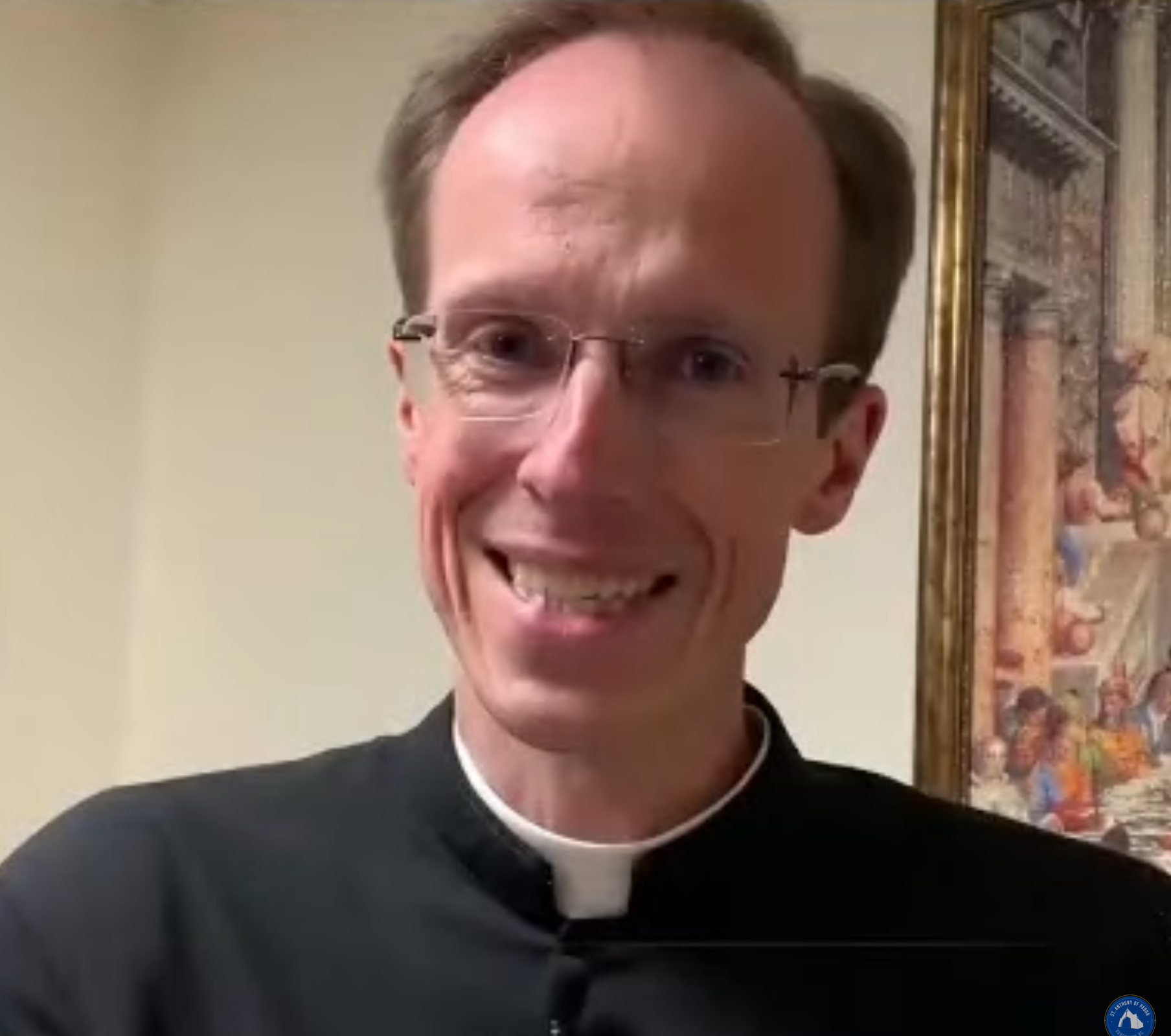
Fr. George Elsbett
Their pastor, Fr. George Elsbett, has chosen his hours as once a week from 1 to 4 a.m.: “For me, they are the most beautiful hours… There is a silence—an interior stillness—that can only be found at night. There is a peace, a focus on him, that during the day I have to struggle much harder to attain… I am deeply grateful for this time as a priest, when I can place not only myself but… our… church community before him—with all its needs, burdens… joys, and intentions. [Also,] in the midst of a difficult pastoral conversation, I… trust that the person who is at that very moment… in adoration may obtain more fruit for that conversation than anything I… could say.”
I mentioned twice before Janet Moylan, whose husband and daughter were killed at the same time while on a beach in Mexico. A year before Tim’s death, he signed up for Wednesday adoration at 4 a.m. and started a spiritual journal, noting that he possibly might not live much longer and so he wanted to use the time God gave him to do His will.
We who adore Jesus weekly know how much we depend on Him. So, by the end of the year, we’re inviting 184 more people to receive His blessings. If we’re not yet ready, we can still pray more throughout the day: pausing in prayer in the car before we start driving, pausing in prayer after we arrive; praying as we begin our work, during breaks, before and after conversations, and before and after exercise.
In life, we sink when we focus too much on ourselves; and Jesus supports us when we focus on Him.