Once, I was talking to our school principal, Mr. Perry, and sharing some difficulties I was having, specifically, getting annoyed with some people. He said, ‘Maybe you’re becoming a grumpy priest.’ I smiled. Maybe I am. However, I don’t want to be. I have a kind of repulsion towards being a bad priest—I do not want to be grumpy, lazy, worldly, mean, or cowardly. The first priest I got to know, Fr. Doyle, S.J. was intelligent, wise, kind, and surprisingly funny, and I admired that. Then I met the monks at Westminster Abbey, who were dedicated, disciplined, academic—and I wanted to be like that.
Today, we’re meditating on Jesus’ Parable of the Talents: God loves us and gives us gifts. We get to respond and choose who we’re going to be! This is a follow-up homily from two weeks ago, when we talked about the call to become a saint, that it matters what we do, how we distinguish people who live mediocre lives from those who try their best, and how we like ourselves better when we try our best.
Jesus says that the Kingdom of heaven “is as if a man, going on a journey, summoned his slaves and entrusted his property to them; to one he gave five talents, to another two, to another one, to each according to his ability” (Mt 25:14-15). The man represents Jesus; the journey represents His Death, Resurrection, and Ascension. We, the slaves, are given talents, which, as covered before, is a measurement of weight, so, five talents of gold would be roughly $25 million. Historically, this parable was so popular that our word ‘talent,’ in the sense of abilities, comes from it. And notice that God doesn’t give the same amount to all, because each person has their own mission.
Let’s pause on that point. Some of us come from strong families, others, like me, come from families with major problems, others come from very dysfunctional families. Some of us have more abilities, money, and opportunities than others. But, we each have exactly what we need to become the saint Jesus destined us to be.
St. Thomas Aquinas wrote the Summa Theologica, a classic of western civilization because it’s an attempted steel-man argument for almost every topic in theology. St. Joan of Arc couldn’t read, and was poor, but had everything she needed to defend her country. St. Peter To Rot, the only saint we know of from Papua New Guinea, had the right amount of abilities and grace to love his family heroically and lead his local Church after the Japanese invasion in 1942.
-
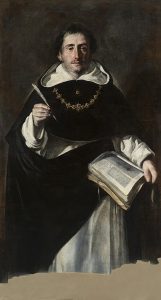
- St. Thomas Aquinas
-
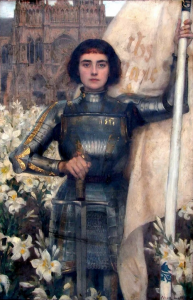
- St. Joan of Arc
-
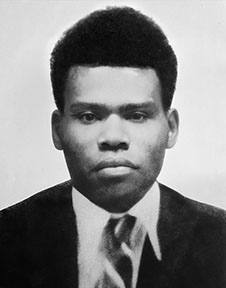
- St. Peter to Rot
“After a long time the master of those slaves came and settled accounts with them [This represents Jesus’ judgment of each person right after we die]. Then the one who had received the five talents came forward, bringing five more talents, saying, ‘Master, you handed over to me five talents; see, I have made five more talents [because he traded and earned more, which represents cooperation with God].’ His master said to him, ‘Well done, good and trustworthy slave; you have been trustworthy in a few things, I will put you in charge of many things; enter into the joy of your master’” (25:19-21).
Have we heard the expression, ‘God loves you just the way you are’? Is that true? It is true, but incomplete. ‘But loves you too much to let you stay the way you are.’ God loves us because He’s our Father and we are His children, and we don’t have to earn His love. Yet, He doesn’t want us to be passive; He wants us to grow! We don’t want our children to stay infantile; it gives us joy when they learn how to read, cook, help other people!
In 2024, CNBC reported that 25% of Gen Z job applicants brought a parent to a job interview. Many of us have been told all our life by our parents and teachers that we’re special. There’s just one problem with that. So is everyone else. We’re loved, but we’re not special until we earn it.
To our young people, I praise God for you, but I only congratulate you when you earn it: When you’re polite, when you stay off your phone and talk to people, when you offer to help; when you’re an altar server and move like an adult, with poise; when you’re in choir and show up on time and pay attention; when you serve in ministry and help others to know Jesus—you earned those compliments, and you should feel good about yourselves, because that’s a choice you made in response to Jesus’ gifts to you.
“Then the one who had received the one talent… came forward, saying, ‘Master, I knew that you were a harsh man… so I was afraid, and I… hid your talent in the ground…’ His master replied, ‘You wicked and lazy slave!… You ought to have invested my money with the bankers, and… I would have received what was my own with interest… As for this worthless slave, throw him into the outer darkness, where there will be weeping and gnashing of teeth’” (25:24-27,30). The slave says his master is harsh, but, if that were the case, he could have at least done the minimum. Since he didn’t, some commentators believe that he was spiting his master. This is similar to not trying, being apathetic, when we say, ‘Who cares,’ or ‘Whatever.’
There’s a remarkable 2014 French film called Two Days, One Night, starring Marion Cotillard, who plays a mother with depression. The opening shot is of her sleeping and barely being able to answer the phone. When she finds out she’s going to lose her job, she has to go to 16 coworkers asking if they’ll vote to lose their bonus so that she won’t lose her job. It’s a realistic story of someone who’s life is falling apart, who tries to overdose, but does her best. I won’t spoil the ending, but it’s satisfying in the deepest way possible, because her character says, ‘We put up a good fight. I’m happy.’
People who suffer with depression often need heroic strength just to get out of bed. If we’re in a situation like this, or with physical or emotional health problems, and that’s truly the best we can do, then that’s all God asks of us, to do our daily tasks—that’s what it means to invest our talents with the bankers.
The Master says, “So take the talent from him [the lazy slave who didn’t care], and give it to the one with the ten talents. For to all those who have, more will be given, and they will have an abundance; but from those who have nothing, even what they have will be taken away” (25:28-29). When we have faith, we get more faith. Why? Because faith is not only a gift, but a response. Those who choose to close their hearts to Jesus lose more and more spiritually because they push Him away. If, however, we choose, ‘Jesus, I trust in You, because You’re good and You love me; I choose to follow You,’ things start opening up.
Virtue is a magnet for blessings. E.g. If you choose to be friendly (especially when life is difficult), things won’t become perfect, but, over time, you will attract blessings, because people love friendly people. Have you ever noticed that hardworking, confident people attract more success? And people who choose to be humble, forgiving, and generous attract better relationships.
As a reminder, next week, we have the Christ the King Challenge, when we’ll ask three things: Please put up your hand if you’ve made the decision to place Jesus at the center of your life. Please put up your hand if you’ve made this decision for the first time in the past 12 months. If Jesus isn’t at the center, please put up your hand if you would like Him to be.
Starting in Advent, our focus will be on the Eucharist, leading up to Jan. 1, 2027 with our goal of 500 of us committing to at least 15 minutes of adoration every week for the rest of our lives. The Eucharist is the greatest talent God has given us.
Here’s one way to respond (and feel free to choose another way): In two Mondays, Nov. 23, 2026 we’re going to have a kickoff regarding this book, 33 Days to Eucharistic Glory. It’s a persuasive and practical book introducing us to the power of the Eucharist. I’ve read it and love it. Some of us might think it’s too simple, but if you’ve already made a commitment to adoration, we’re asking if you would share your talent by inviting someone who hasn’t committed to adoration to do the 33-day program with you. If adoration is a blessing for you, would you invite one other person to do the program with you?
This is an opportunity to become a man or woman of prayer. It’s one thing to pray, it’s another to be a person of prayer. And it’s another to be a generous apostle of prayer. God loves us and has given us gifts. We get to choose who we will be.