

Happy New Year, everyone!
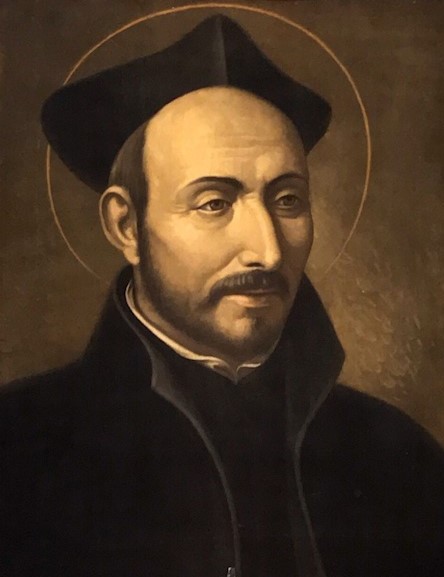 There is a famous story about St. Ignatius of Loyola. In 1522, a few months after experiencing God’s love, he was on pilgrimage from Spain to Jerusalem, riding a mule. A Muslim man met him and they started talking about the Blessed Virgin Mary, which led to a strong disagreement. The man rode ahead but Ignatius was so disturbed that he hadn’t defended Mary’s honour that he wondered if he should follow and stab the man with his dagger (He admits this in his autobiography, and we need to remember that he was a soldier). He wrestled with this idea, unsure what he should do. Eventually he decided that he would let the reins go slack so that, when he got to the fork in the road, if the mule went to the village, he’d stab the man; if the mule went the other direction, he’d let it go. The biography says that God had the animal go away from the village and comments that Ignatius’s soul was still blind (The Autobiography of St. Ignatius of Loyola, 14-16), meaning that, though he loved God, he was not virtuous but still following his feelings and sinful tendencies.
A month ago, we talked about how we can be indecisive and procrastinate. Today, we’re considering if we’re spiritually stuck and if we’re just letting circumstances determine our life. At the beginning of this new year, we’re meditating on the fact that God has a plan and we need to make choices.
In the Second Reading, St. Paul says, “When the fullness of time had come, God sent his Son, born of a woman, born under the law, in order to redeem those who were under the law, so that we might receive adoption to sonship” (Gal 4:4-5). ‘The fullness of time’ refers to a point in God’s plan: He created the human race with the goal that we could be with Him. When we resisted over thousands of years, He kept trying to help; eventually, there was the right moment when God would become human and make sure that at least one of us, Jesus, would love Him perfectly. Of course, the second person who loves Him perfectly is Mary. Every January 1 we celebrate the fact that she’s the mother of God—that was God’s plan, and she had to cooperate.
A young man named Joshua Miller once asked a priest how we can know God’s will. The priest said ‘It’s pretty easy.’ Joshua said, ‘Easy?’ ‘Yes. You pray for God’s will. You consider possible choices. Then you make a decision and go for it.’ Joshua wrote, “I was struck… by its refreshing simplicity and emphasis on the power we have, by God’s grace, in our own action” (Luke Burgis & Joshua Miller, Unrepeatable, 196). What do you think about that: ‘the power we have, by God’s grace, in our own action’? God gives us a choice: We can live on purpose, according to His plan, or live by accident, where we react to situations and what other people want.
Our principal, Mr. Perry, has six children and an intense job. For most of his life, his focus was responding to what people asked of him—sometimes that was God’s will but, in the long run, it wasn’t entirely God’s will because the school wasn’t improving and he wasn’t growing spiritually. So, for the past few years, he’s been taking 30 minutes every Sunday to pray: What does God want this week? What’s His will for Mr. Perry’s prayer life, his marriage, his children, and the school? He writes them down. So, when there’s a problem, he can see if that takes precedence over what he’s planned. Sometimes it should, sometimes not (because, sometimes we let little problems become crises). Before the Sunday night discernment, every urgent request during the week became his priority. Afterwards, his priority is what will help redeem the most people, and he’s still able to deal with all the requests.
Knowing God’s will is simpler than we think. We’re the ones who complicate things and expect God to provide absolute certainty because we’re afraid of making mistakes and don’t trust Him enough.
Our mother Mary didn’t always have an angel appear to her and tell her what to do, as when St. Gabriel said she would be the mother of God. For most of her life, she had to pray, consider choices, then make a decision. This is the way it is for all the saints.
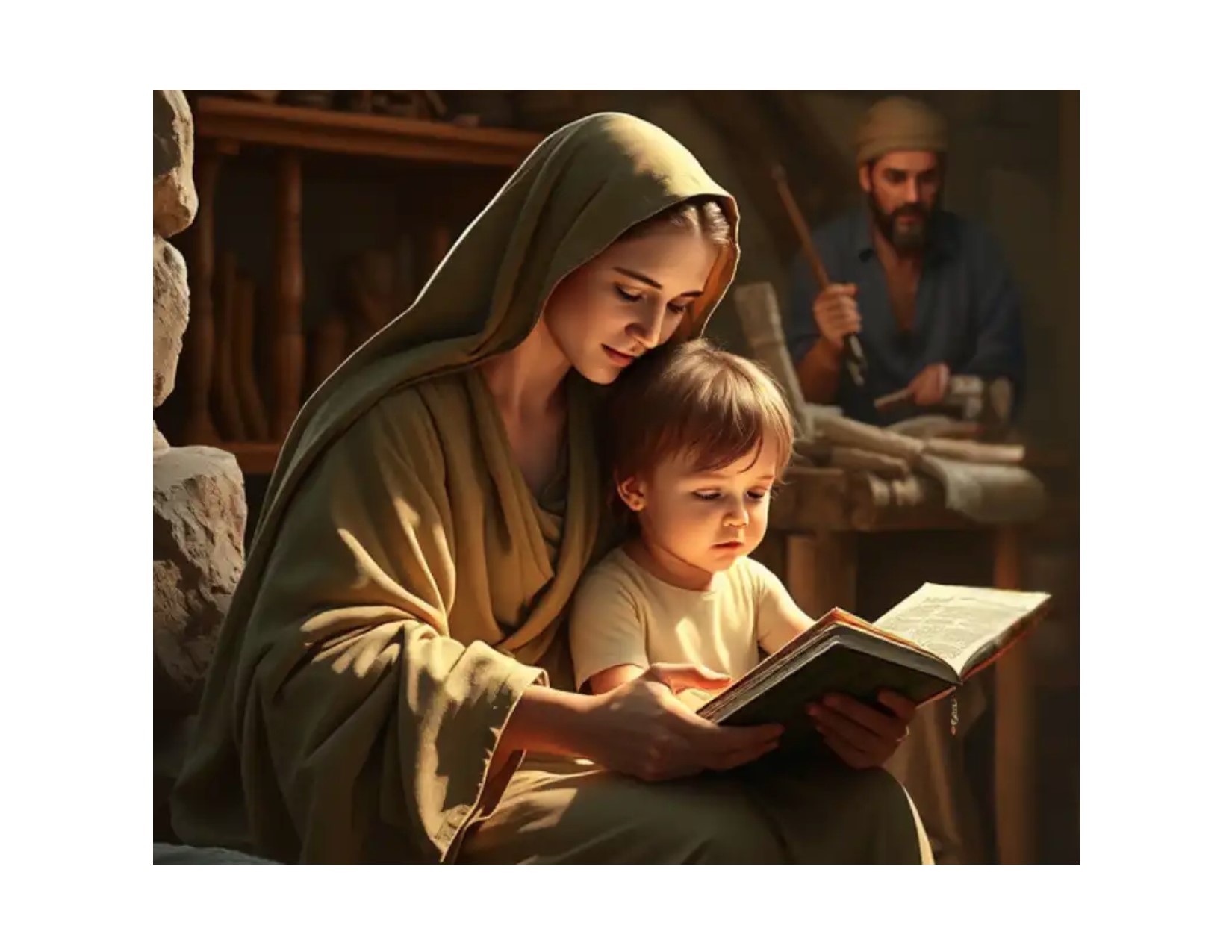
In the Reading, Paul tells us that Jesus was sent ‘so that we might receive adoption to sonship.’ Because we’re now children of God, we have freedom! St. Paul says, “So you are no longer slave but son” (4:7). Slaves don’t have freedom. Much of our culture acts like we’re slaves: This is why we blame the economy, the media, President Trump and tariffs, racism; we say we’re too busy. These are factors in life but we shouldn’t let them detract from the fact that the Father has given us, His children, freedom to co-create His plan.
This doesn’t mean it’s a free-for-all. He still has a plan! So, how should we co-create? By focusing on bringing others to God the way Jesus did.
St. Ignatius never intended to found the Jesuits, which is now the largest order in the Church; God never gave him clear instructions to do this. So, how did it come to be? He prayed, considered, and acted.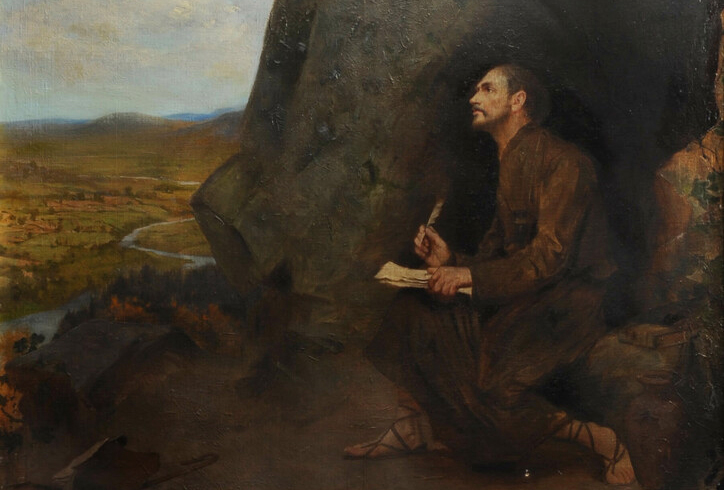
His first goal was simply to go to Jerusalem to visit the place where Jesus lived—good, but that was still mainly for himself.

He was sent back to Europe, and so he changed his plans based on the circumstances: He started helping others spiritually.
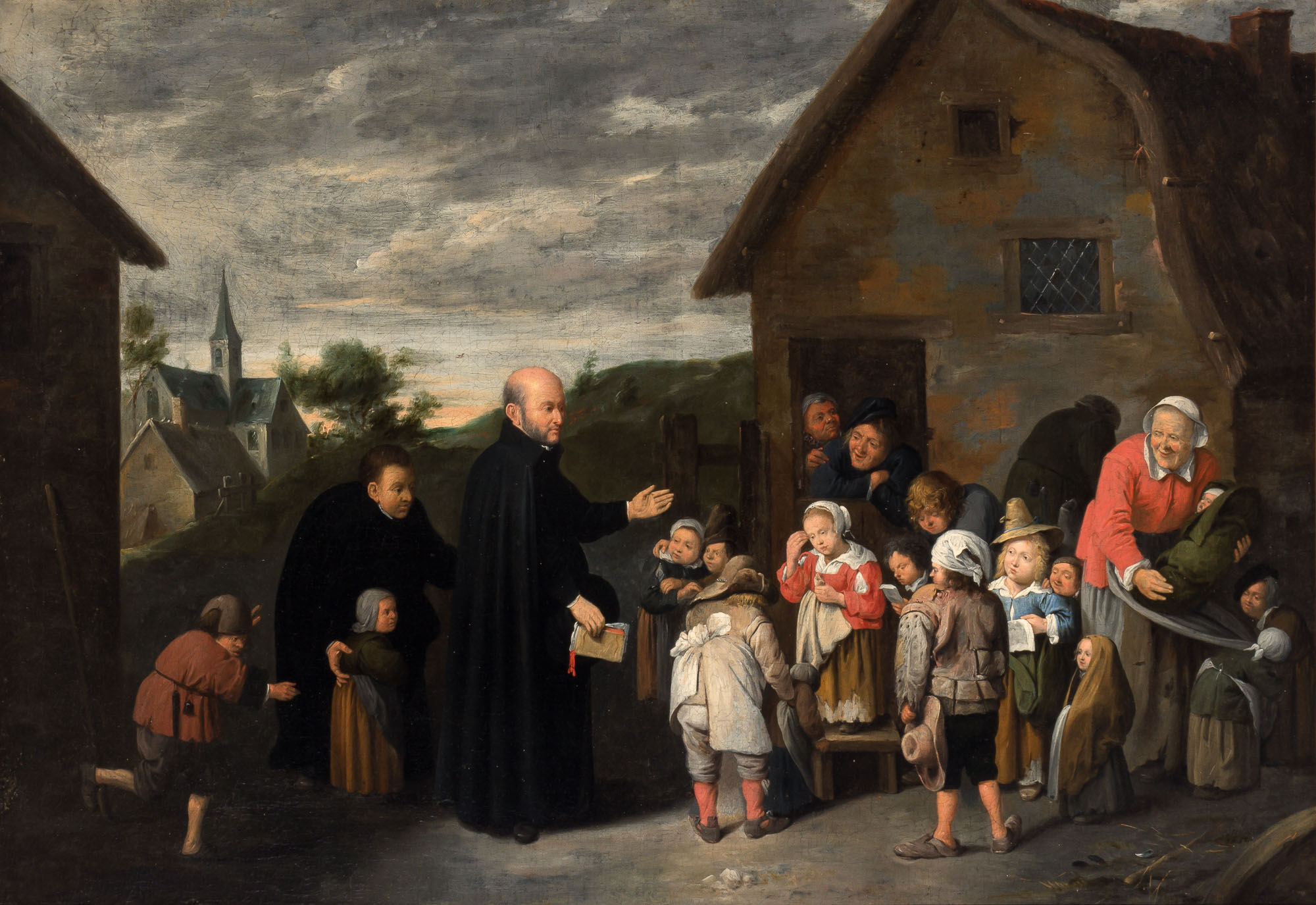
But then he got in trouble with the Inquisition because he had no training. So he decided to move to Paris and study theology.
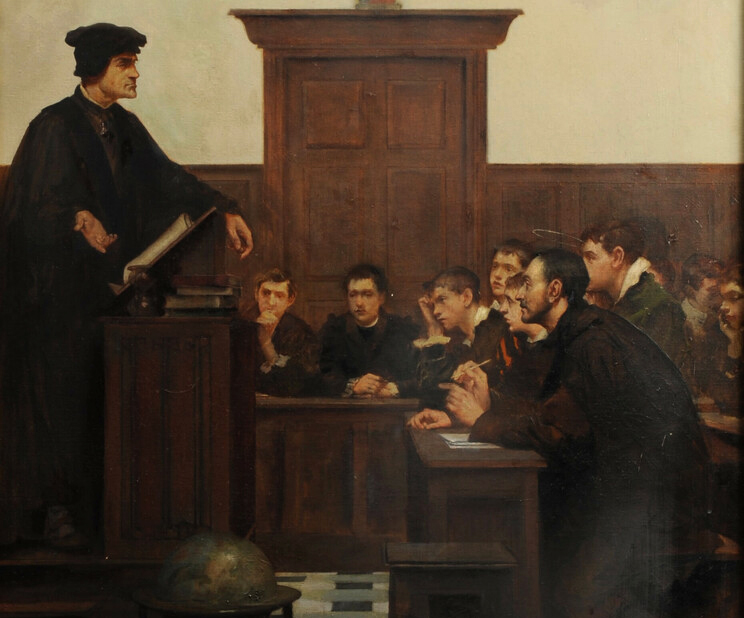
There he met six other men who wanted to evangelize. They didn’t intend to form the Jesuits; they just intended to go to Jerusalem to evangelize, but, because no boat was available for a year, they went to Rome and allowed the pope to send them wherever was the greatest need.
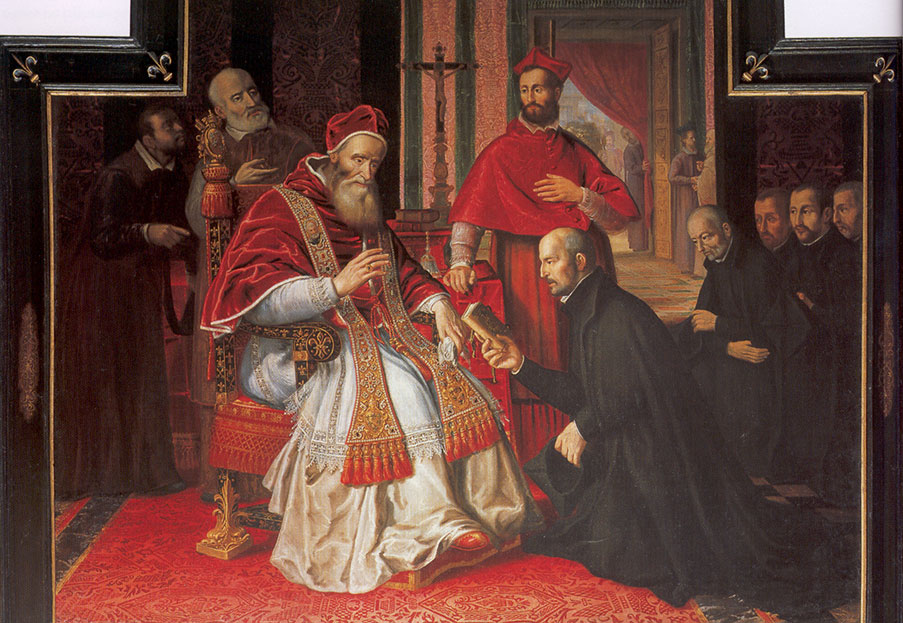
That’s 18 years between thinking about stabbing that man and the founding of the Jesuits. The key questions he asked were: What will give God the greatest glory? Where can I help others the most?
At the beginning of a new year, we tend to focus on improving our lives—that might be a kind of spiritual blindness. A better focus is: What will give greatest glory to God? And this includes how I can make other people’s lives better, and how I can make my life better. By focusing on God first, other things will become clear. This doesn’t mean that every decision we make will be perfect, but it’s infinitely better than just reacting, and it’s closer to God’s will than delaying decisions.
Ever since Mr. Perry started planning his week with God’s help, trying to follow God’s plan, he’s become a better disciple, husband, father, and leader.
God has a beautiful plan for us this year. Like our mother Mary, our job is to pray, consider the options, make a decision, and go for it.